Why Does Website Speed Matter So Much?
A slow page makes even the best design invisible. We explain how performance affects user experience and your business, with practical steps to improve it.
Visitors don't wait long for a page to load. When a page is slow, no matter how good the content is, people head back and move on to another site. That is why speed is not a detail added later, but a design decision to plan from day one.
How do users perceive speed?
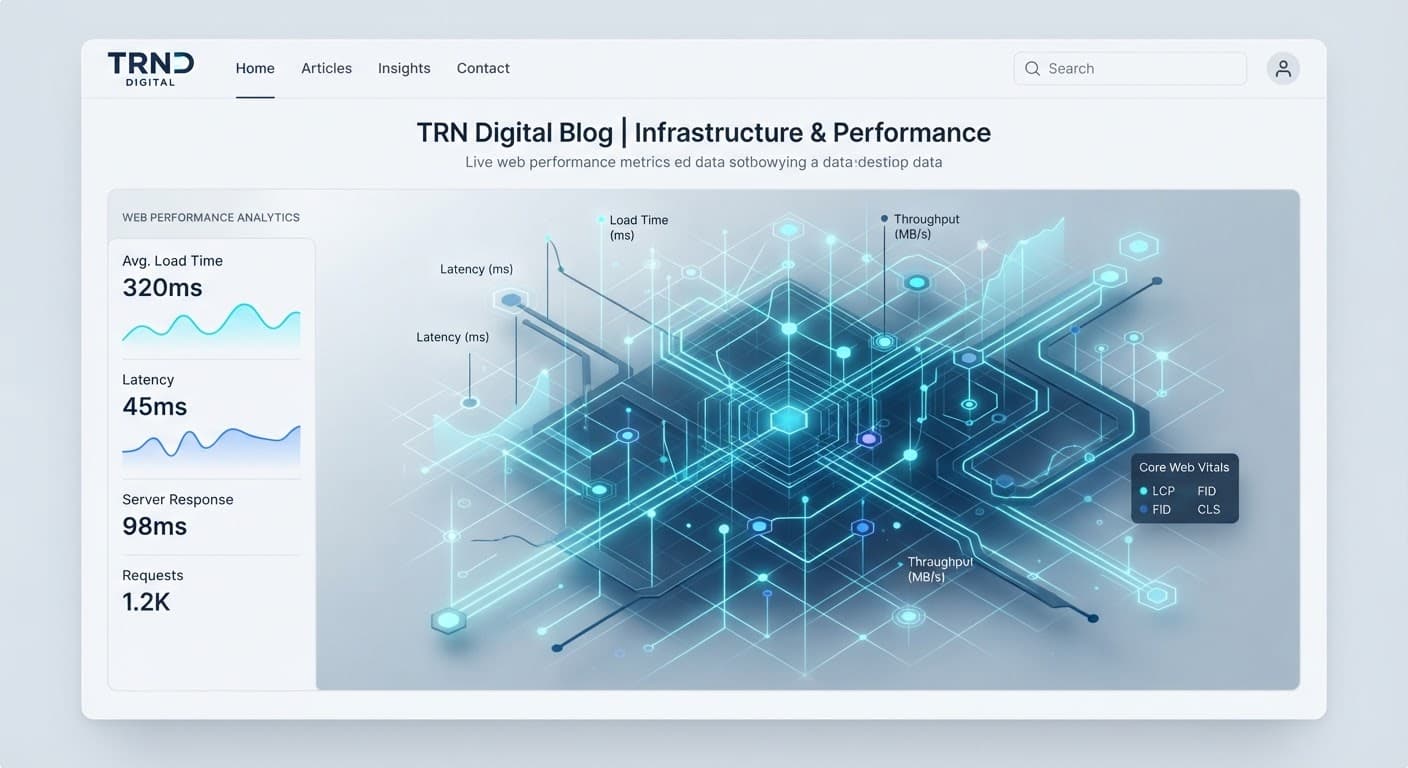
Google's Core Web Vitals sum this up in three measures: how quickly the main content appears (LCP), how fast the page responds to interaction (INP) and whether elements jump around while loading (CLS). They influence both user experience and visibility in search results.
The basics we apply in our projects
- Serving images at the right size in modern formats (WebP/AVIF) and lazy-loading what's off-screen.
- Rendering pages on the server or at build time wherever possible, and shipping only the JavaScript that's needed.
- Self-hosting fonts and preventing layout shifts while the page loads.
- Avoiding unnecessary libraries and third-party scripts.
Speed is never a one-off job
New content, campaign images and plugins can make a site heavier over time. That's why we recommend measuring regularly after launch and keeping up with small improvements. A fast site means longer visits, more conversions and a stronger brand impression.
Have a project around this?
Let's hear your idea and plan the right solution together.